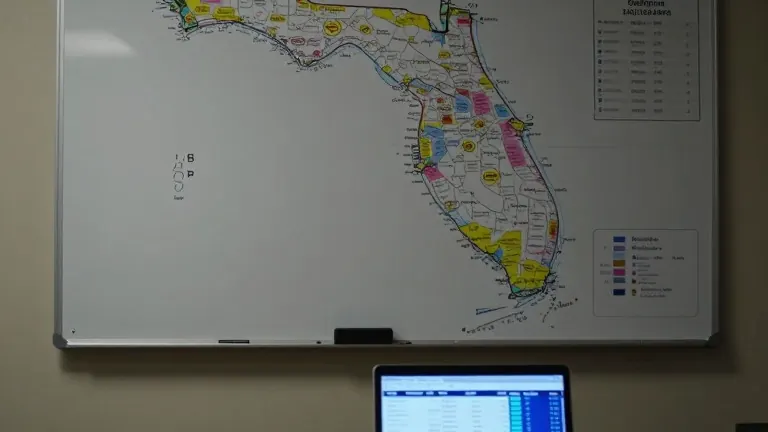
Democrats seize both chambers of Congress and Texas House in historic wave
The Associated Press reports that voters delivered a decisive rebuke to the president's party, shifting control of the House, Senate, and multiple state legislatures to the opposition.
By Katherine Diallo ·
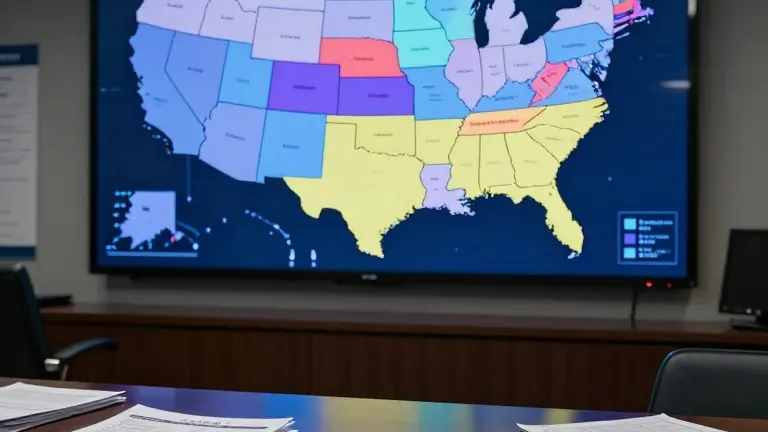
Voters across the United States delivered a sweeping mandate for change on Tuesday, handing Democrats control of both chambers of Congress and a historic victory in Texas. The Associated Press reported that the results marked the biggest single-election shift in partisan power at the state level since 2010. Democrats flipped the U.S. House of Representatives and the U.S. Senate, ending two years of unified Republican control in Washington. In the House, Democrats won 233 seats to the Republicans' 138, a net gain of 30 seats. In the Senate, Democrats claimed 20 of the 35 contested seats, securing a majority. The Associated Press noted that the party took full control of at least five state governments where they previously shared power, a move that pressures the party to address rising costs of living and inflation.
The most dramatic shift occurred in Texas, where Democrats won the state House for the first time since 2002. This victory accompanied historic wins for governor and U.S. Senator in a state long held by Republicans. Gina Hinojosa was elected as the first Democratic governor in Texas since 1994. The Associated Press stated that this win breaks a decades long streak of Democratic exclusion from statewide races in the state. Republicans retained control of the Texas Senate, but the loss of the House represents a significant check on their legislative power. Political scientists noted that the Republican redistricting efforts in the state may have mobilized additional Democratic voters, contributing to the surge.
President Donald Trump, whose party lost its sole control of Washington, reacted with a mix of conciliation and deflection. The Associated Press reported that Trump told reporters he could work with Democrats but warned of gridlock ahead. He threatened to use the power of the presidential veto to strike down their agenda, telling Politico, "I don't want to be just sitting there for two years vetoing everything." Despite the losses, Trump insisted that if he had been on the ballot, he would have won in a landslide. The AP Voter Poll indicated that about two-thirds of voters believed Trump did not have the right priorities during the campaign. This sentiment appeared to drive the Democratic surge, as voters expressed frustration with the economy and the war in Iran.
Democrats are already laying out a legislative agenda focused on kitchen table issues. House Democratic Leader Hakeem Jeffries, who is expected to become the first Black speaker of the House, promised to deliver on the dramatic change voters demanded. The party plans to tackle high gas prices, grocery costs, and healthcare access in the first 100 days of the new Congress. Rep. Robert Garcia, the top Democrat on the House Oversight Committee, issued a one sentence warning to the administration: "Lawyer up." Sen. Ron Wyden, the top Democrat on the Senate Finance Committee, signaled a similar approach with the word "Subpoenas." These moves suggest a robust oversight agenda aimed at holding the executive branch accountable.
Statewide results mirrored the federal trend, with Democrats gaining governorships in Georgia, Iowa, Ohio, and Texas. The Associated Press reported that Democrats will hold at least 28 governorships in 2027. The party also broke or prevented Republican supermajorities in nine legislative chambers across eight states. This means Republicans will need Democratic help to override vetoes in states like Iowa, Ohio, and North Carolina. Katie Owens Hubler, director of elections at the National Conference of State Legislatures, called the result the largest shift in state power since 2010. The wins come after Democrats lost nearly 1,000 state legislative seats during President Barack Obama's tenure, a slide they have tried to reverse for several cycles.
Redistricting played a complex role in the outcome. President Trump urged Republicans in eight states to redraw congressional districts to gain a midterm edge. The Associated Press reported that this plan ultimately failed, with Republicans losing most of the targeted seats. In Texas, the redistricting of districts in the Rio Grande Valley did not secure the expected gains. Democratic Reps. Henry Cuellar and Vicente Gonzalez won reelection, while Republican Rep. Monica De La Cruz was unseated. The AP Voter Poll found a substantial shift in Hispanic voters moving away from Republicans compared to the 2024 election. Mark Jones, a political science professor at Rice University, noted that Republicans had unrealistic assumptions about Latino voting patterns remaining in their favor.
Vice President JD Vance, who faces a divided government, blamed the war in Iran for the Republican losses. The Associated Press noted that Vance publicly broke from Trump's defense of the war on Wednesday. This move appeared to distance himself from the president's key policy decisions. Trump, however, maintained that the war was worth it despite acknowledging its role in the election results. The AP Voter Poll showed that about 6 in 10 voters disapproved of how Trump was handling the presidency. Views of his priorities were mostly negative, with many voters citing the cost of living as a crucial factor in their decision. The election results suggest that the electorate is focused on economic stability and affordability.
Democrats are also looking to redistrict in states where they now hold full control. The Associated Press reported that there will be pressure on Democrats in Wisconsin and other battleground states to redraw congressional maps. This mirrors the actions taken by Republican-led states ahead of this election. In Wisconsin, Democrats flipped both chambers of the state Legislature, breaking a 16-year Republican majority. Devin Remiker, chairman of Wisconsin's Democratic Party, said it is now time to deliver. The state will have an evenly divided congressional delegation in 2027, as Democrats picked up two seats even under maps that favored Republicans. This outcome underscores the significant shift in the political landscape across the Midwest.