Democrats Seize Congress and Statehouses in Historic Midterm Wave
Voters shifted control of both federal chambers and numerous state governments to the Democratic Party, marking the largest partisan change since 2010.
By Sarah Ross ·
The Associated Press reports that Democrats have secured control of both the U.S. House of Representatives and the U.S. Senate in the 2026 midterm elections. This shift represents a fundamental reshaping of power in Washington, ending a period of unified Republican control. The results were driven by a broad rejection of the party in power, with voters citing the economy and the war in Iran as primary concerns.
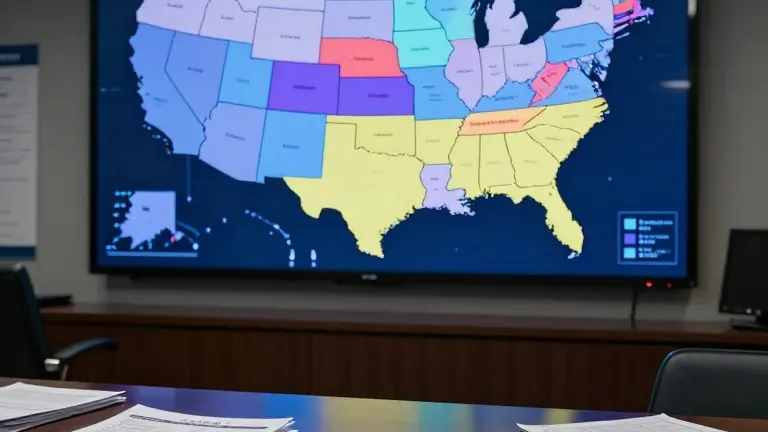
According to Ballotpedia, Democrats won 233 seats in the House, a net gain of 30 seats from the previous cycle. In the Senate, Democrats captured 20 of the 35 contested seats, including seven that previously belonged to Republicans. The Associated Press notes that this marks the first time since 2010 that such a significant change in partisan power has occurred at the state and federal levels simultaneously.
The wave of Democratic victories extended beyond federal offices to state governments. Ballotpedia data shows that Democrats gained control of at least five statehouses where they previously shared power. In Texas, the party took control of the state House for the first time since 2002. The Associated Press identifies this as part of a series of sweeping gains that shifted the balance of power across several battleground states.
President Donald Trump, whose party suffered the defeat, gave extended comments on Wednesday regarding a White House ballroom construction project. The Associated Press notes that he spent nearly 20 minutes discussing the building without mentioning the election results. He told reporters, "If I were on the ballot I would have won," suggesting that the candidates were the primary reason for the loss.
Vice President JD Vance attributed the Republican losses to the war in Iran. The Associated Press reports that Trump struck a conciliatory tone, suggesting he could work with Democrats, but he also warned of potential gridlock. He told Politico, "I don't want to be just sitting there for two years vetoing everything." This stance sets the stage for a two-year power struggle between the White House and the incoming Democratic Congress.
House Democratic Leader Hakeem Jeffries, who is expected to become the first Black speaker of the House, stated that his party is ready to deliver on the promise of change. "We hear you," Jeffries said. "We're going to work hard to deliver on the dramatic change that you deserve." Democrats are promising a 100-day agenda that focuses on lowering the costs of gas and groceries.
Republicans, however, argue that the results reflect specific local issues rather than a national mandate. Mark Jones, a political science professor at Rice University, told the Associated Press that the Democratic win was driven by one man in the White House and his policies. "When we're trying to think about why Democrats won, it's one man in the White House and his policies, Donald Trump," Jones said.
The Associated Press notes that the election results put pressure on the new Democratic majority to address the rising cost of living and high gas prices. State governments will now shape policies affecting tax rates, school choice, and data center development. In Wisconsin, Devin Remiker, chairman of the state Democratic Party, said, "Now it's time to deliver."
Democrats also broke or prevented Republican supermajorities in nine legislative chambers across eight states. This means Republicans will need Democratic help to override vetoes in states like Iowa, Ohio, and North Carolina. The Associated Press highlights that this is the biggest single-election change of partisan power in state governments since 2010, according to Katie Owens Hubler of the National Conference of State Legislatures.
Looking ahead, the new Congress will begin its session on January 3, 2027. The Associated Press reports that House Speaker Mike Johnson will not seek reelection as the party leader. The results indicate a deep sense of voter anger over the economy and the state of democracy. Democrats vow to launch a robust oversight agenda to hold the administration accountable, while Republicans prepare to defend their policies in a divided government.
The Associated Press also reports that the election saw a substantial shift in Hispanic voting patterns. The AP Voter Poll indicates that about one-third of Hispanics backed the Republican in their local U.S. House race, down from roughly 4 in 10 who voted for Trump two years ago. This shift was a key factor in Democratic gains in states like Texas and Florida.
Ultimately, the 2026 midterms have set the stage for a new era in American politics. The Associated Press describes the results as decisive and bewildering in their scope. With control of both chambers of Congress and several key state governments, Democrats are now positioned to challenge the president's agenda and implement their own priorities for the next two years.