Lula wins re-election, complicating US regional strategy
Brazil's president defeated Flávio Bolsonaro in a vote that challenges President Trump's plans for South America.
By Katherine Diallo ·
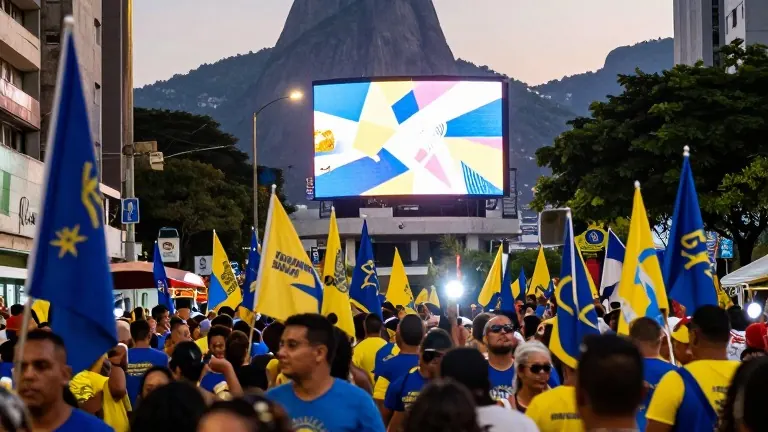
Luiz Inácio Lula da Silva has won re-election as Brazil's president, a result that complicates the United States' strategy for the Western Hemisphere. In his victory speech, Lula declared that Brazil would not accept being anyone's backyard, a message aimed directly at Washington.
The path to this win began with a breakdown in relations between the two leaders. About a year ago, Lula told reporters he had no relationship with Donald Trump and no intention of calling him. At the time, the US president had imposed punitive tariffs on Brazil, a move largely seen as a political response to the trial of former President Jair Bolsonaro, whom Trump called a witch hunt.
Lula campaigned on a platform of Brazilian sovereignty, attacking US interference in his country's judicial process. He wore a blue cap that read Brazil belongs to Brazilians and accused the Bolsonaro family of being unpatriotic for lobbying for the tariffs. This stance boosted his approval ratings and resonated with voters, including some in the agricultural sector that typically supports the right.
The US eventually reduced the tariffs, though they have since risen again. The two leaders later met in the Oval Office, where Trump described the talks as very good and Lula said he left very satisfied. Trump responded to the election results by saying he liked Lula and they got along well, even as he called the vote terrible and rigged.
Trump's frustration stems from a shift in Latin America to the right. Ecuador, Chile, Colombia, Argentina, and Peru have all elected presidents aligned with the US administration. Trump had viewed Brazil as the tenth and biggest prize in the region, hoping to include it in his Shield of Americas coalition against narco-trafficking and secure access to its rare earth minerals.
Flávio Bolsonaro, who lost the election, has refused to recognize the result despite the Supreme Electoral Court finding no evidence of irregularities. The relationship between the two nations remains tense. Brazil accused the US of trying to cast doubt on its electoral system, leading to a diplomatic dispute over visas. Lula has also opposed US military actions in the region and criticized the designation of two Brazilian gangs as terrorist organizations.
The US administration also has concerns about Brazil's Pix instant payment system, which it sees as competing with Visa and Mastercard. Lula's campaign accused Meta of favoring Flávio Bolsonaro, a claim the tech company denied but acknowledged involved moderation errors. The US remains Brazil's second-biggest trading partner after China, and for now, the two leaders maintain a working relationship.
Source: BBC News