Hocus Pocus: Factory Town hosts six-day dystopian Halloween festival
The three-night event at the Miami warehouse venue ran from October 30 to November 1, featuring five stages and an immersive post-apocalyptic atmosphere.
By Rahul Garnier ·
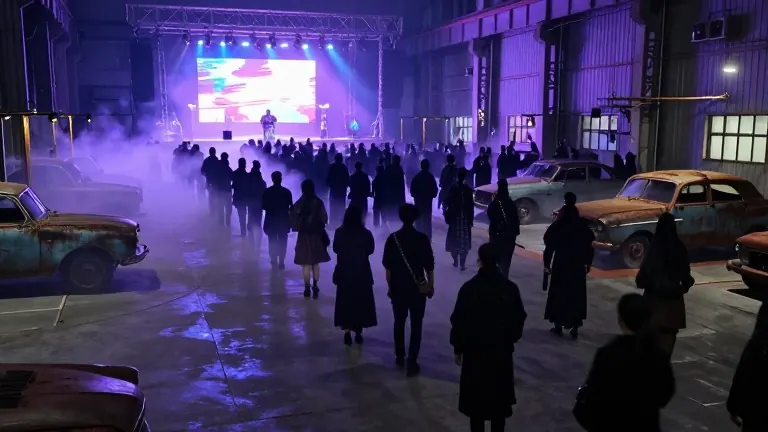
Factory Town in Miami hosted Hocus Pocus from October 30 to November 1, marking the sixth edition of the Halloween-themed electronic music festival. The three-day event transformed the industrial venue into a dystopian setting, a design choice that organizers said aimed to create an experience closer to a horror film than a standard nightclub night.
The production design relied on fog machines and scattered props to establish the mood. Old, damaged cars and industrial decorations were placed throughout the space to create a post-apocalyptic environment. Five distinct stages operated simultaneously during the event. Each stage featured its own visual identity, musical style, and atmosphere, allowing attendees to move between different sonic experiences throughout the night.
Crowds dressed in elaborate costumes were a central visual element of the festival. Attendees reported that outfits went beyond typical last-minute purchases, with many creating detailed ensembles that integrated with the venue's theme. The collective appearance of the crowd reinforced the immersive quality of the event, making the Halloween concept visible in every corner of the Factory Town complex.
Electronic music remained the primary focus of the program. DJ Prospa performed the set on October 31, drawing a large crowd to the stage for his track "Free Your Mind." University of Miami student Eiji Tsukamoto cited that specific performance as a key reason for attending the event. The audience remained engaged despite a sudden burst of heavy rain during the set.
Staff deployed a tent to shield the DJ equipment from the precipitation. The cover was removed once the rain stopped, and the audience continued dancing through the remainder of the performance. The weather disruption did not interrupt the flow of the show, and the energy levels in the crowd remained high throughout the set.
The festival concluded at 7 a.m. on November 1. Because daylight saving time ended that same night, the clock change provided attendees with an additional hour of programming. The final hours of the event saw sustained high attendance across all five stages, with the venue remaining active until the early morning hours.
Source: The Miami Hurricane