Arizona faces 47% cut to Colorado River water as new federal plan takes aim at CAP
A new federal water-sharing plan proposes a 47% reduction in Central Arizona Project allocations, triggering legal challenges from state and canal officials.
By Katherine Diallo ·
A proposed 47% cut to the water allocated to the Central Arizona Project stands at the center of a new federal plan to manage Colorado River consumption. The plan, released this fall, seeks to reduce demand across the basin, which now supplies nearly 40 million people across seven Western states. Reservoir levels in the region have hit record lows, forcing policymakers to act despite a lack of regional consensus on how to rein in usage.
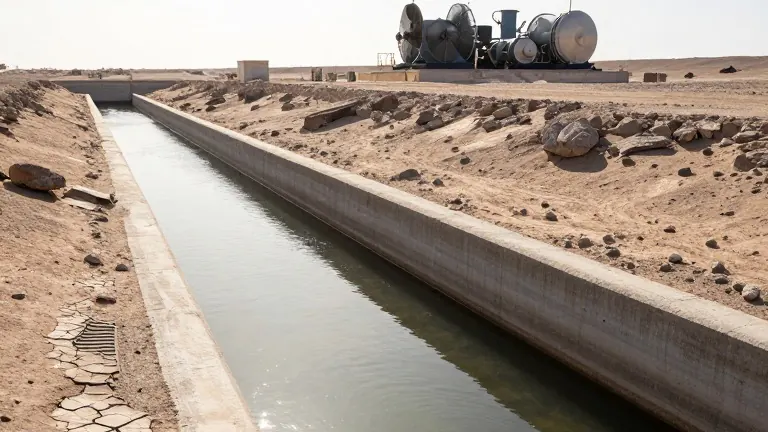
Nevada, Arizona, and the operators of the massive canal system delivering water to the Phoenix area have filed legal actions in response to the proposed reductions. The Central Arizona Project, or CAP, comprises a 336-mile network of canals, pipelines, and pumping plants. This infrastructure transports water through the desert to support the economies and municipalities of Phoenix and Tucson. Rich Weissinger, a former director of field maintenance for the CAP, described the system as an engineering marvel that provides a stable water source for industry and cities.
The current crisis mirrors warnings issued by the system's designers in the 1960s. Floyd Dominy, then commissioner of the Bureau of Reclamation, forecasted that water available for the CAP would more than halve between 1990 and 2030. He attributed this decline to growing use in upstream states, including Colorado, New Mexico, Utah, and Wyoming. Although he did not anticipate the specific role of climate change, his prediction of reduced flows proved accurate. Congressmen Mo Udall, a Democrat from Arizona, also warned that the project required additional water sources to remain viable.
Udall testified before Congress in 1968 that the CAP would need augmentation, or the addition of outside water supplies. He proposed connecting the Colorado River system to the Columbia River system in the Pacific Northwest or building desalination facilities on the Pacific Coast. To protect the Columbia River, lawmakers included a provision in the CAP legislation barring the federal government from studying such interbasin transfers for ten years. Despite these proposals, none of the augmentation plans ever materialized.
Tom McCann, a former deputy general manager for the CAP, stated that the early warnings were largely forgotten. He noted that cost and political hurdles prevented the implementation of complex infrastructure projects. Brad Udall, son of Mo Udall and a senior water and climate research scientist at Colorado State University, argued that his father and uncle Stewart Udall, then secretary of the Interior, could have done better. He suggested they relied on an era of national optimism that favored engineering solutions over difficult political compromises.
The CAP was authorized during a period of booming national confidence following World War II and the construction of major dams and highways. Brad Udall said the 1968 mindset assumed that engineers could solve any crisis. Chuck Podolak, a former director of the Water Infrastructure Finance Authority of Arizona, suggested that promising augmentation allowed policymakers to avoid addressing the fact that urban growth in Phoenix would come at the expense of agriculture. Farms and ranches currently account for roughly three quarters of all Colorado River water use.
The new federal plan aims to address the gap between supply and demand by cutting allocations. The legal challenges from state and canal officials reflect the high-stakes nature of the dispute. The system that sustains central Arizona is now facing a direct test of the assumptions made during its construction.
Policymakers in the seven states continue to negotiate the terms of the new water-sharing framework. The outcome will determine how much water reaches the cities and agricultural lands that depend on the Colorado River for their operations.
Source: WUFT