Vance tests 2028 playbook with populist economics and culture war jabs
The vice president's recent rally stops blend nostalgic storytelling with sharp attacks on Democrats while carefully framing the current administration's economic stumbles.
By Katherine Diallo ·
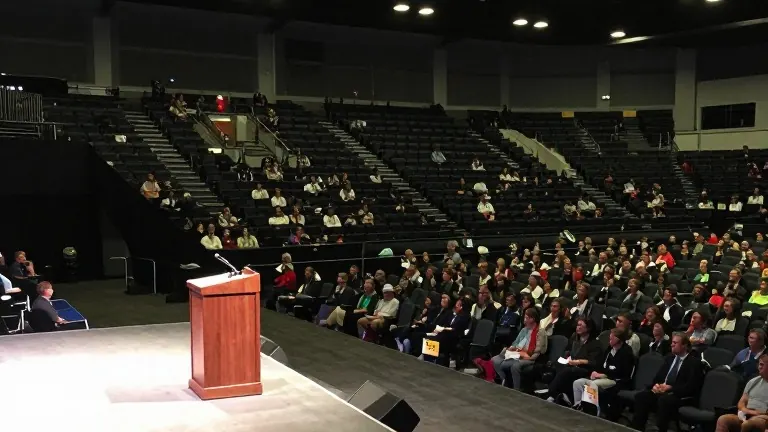
Vice President JD Vance is currently field-testing a political brand that blends nostalgic populism with sharp cultural critique, signaling a specific strategy for a potential 2028 presidential bid. His recent speech circuit across multiple states reveals a distinct departure from the style of the current White House occupant while retaining core ideological elements.
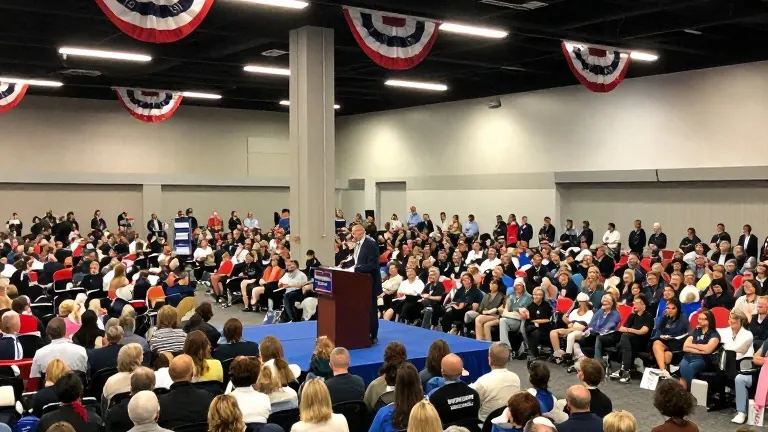
In Weatherford, Texas, on Thursday, Vance targeted Democratic Senate candidate James Talarico, a move that showcased his willingness to use personal jabs. "Now James Talarico has also said that he really has to grapple with his masculinity in addition to his whiteness," Vance told the crowd. He added, "And you know, James, the good news is, there ain't a whole lot to grapple with." The remarks drew cheers and highlighted a delivery style described as more practiced than comedic, yet filled with familiar political energy.
Economic messaging forms the backbone of Vance's pitches, often rooted in personal memory. In Howell, Michigan, he spoke about childhood football teams sponsored by local small businesses that no longer exist. He identified these businesses as casualties of distant political decisions. "They were casualties of politicians in a faraway place who didn't give a damn what happened to Michigan or Ohio, and it was us that paid the consequences," he said. This narrative frames current economic struggles as a result of elite indifference rather than policy specifics.
Vance also leans heavily into cultural themes, contrasting his vision of traditional unity with current political divisions. In North Carolina, he described a past where working-class Black and white families played together without concern for privilege. He framed his approach as a more eloquent packaging of anti-establishment sentiments. However, he occasionally incorporates informal language, telling a Texas audience he was "sweating my balls off" at the podium, suggesting an experimental tone aimed at broadening his appeal.
The vice president faces a tactical challenge in supporting Republican candidates while the current president remains unpopular. In Montana, he addressed high fuel prices caused by the Iran War by comparing them to historical spikes in 1979, 2001, 2007, and 2022. He attributed these increases to global instability rather than domestic policy. He similarly framed high beef prices as a result of meatpacker consolidation, avoiding direct criticism of administration policies that have upset producers.
Vance also leverages his role as head of the administration's anti-fraud task force to connect with voters. In Cincinnati, he recounted working as a cashier at Dhillon Foods and benefiting from federal food programs. This personal history, detailed in his memoir, provides him with biographical tools that his predecessor lacks, specifically regarding military service and economic hardship. His campaign stops aim to replace the singular performance style of the current president with a narrative of shared working-class experience.
His current schedule includes appearances in support of midterm candidates in states including Texas, South Carolina, Michigan, North Carolina, and Montana. These events serve as a preview for how he might pitch a national campaign starting next year. The strategy relies on linking personal biography to broader economic and cultural arguments, positioning him as a distinct alternative within the Republican party.
Source: WUWF