Tesla Launches Robot Training Ground to Accelerate Production
The automator has opened a dedicated facility where thousands of humanoid units will practice complex tasks to refine their artificial intelligence for commercial release.
By Rahul Garnier ·
Consumers and businesses can expect a new wave of humanoid robots from Tesla as the company shifts its focus to mass production. The manufacturer has confirmed that its Fremont facility is now producing the first units that meet strict quality standards for a commercial product. This marks a significant step for ordinary users, as the robots are being engineered for real world duties such as dangerous, repetitive, and around the clock work rather than just laboratory demonstrations.
The production line currently occupies the same floor that previously built the Model S and Model X. Tesla cleared that space in 46 days to make room for a capacity of one million units per year. While the full target is ambitious, the immediate goal is to ramp up output to roughly 20,000 robots every week. Most of the necessary equipment is already in place, and the company describes this growth trajectory as a classic S curve. The initial slope is shallow, but output is expected to climb steeply as the process matures.
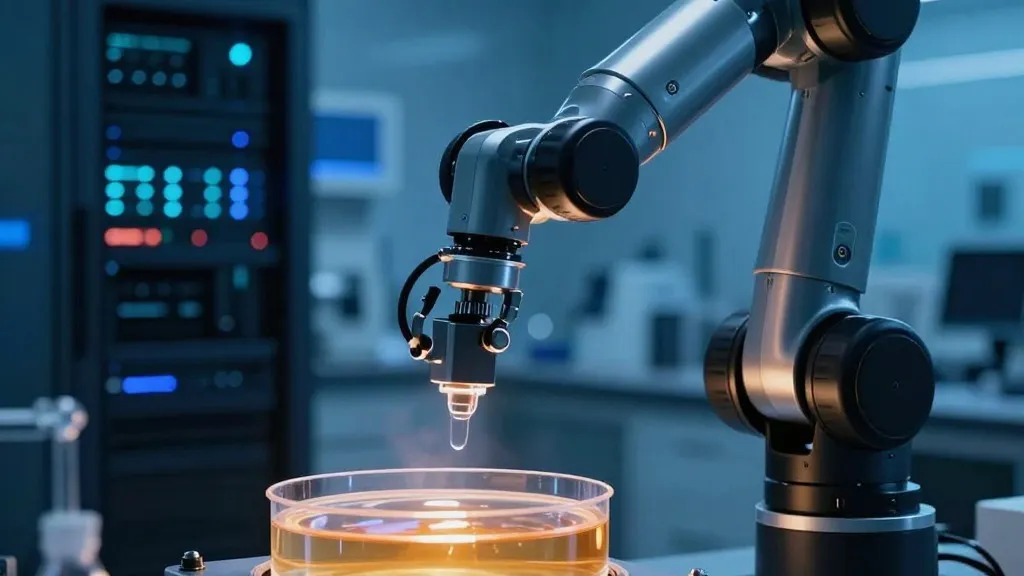
A unique challenge for the robotics team is the lack of a large existing fleet to generate training data. Unlike Tesla vehicles, which send driving data from millions of cars, the Optimus robots do not have a massive network yet. To solve this, the company has established an internal training environment. In this space, between 10,000 and 20,000 robots will practice a wide variety of tasks. Every unit produced becomes a source of data, feeding lessons back into the next version of the artificial intelligence model.
Hardware improvements are also part of the roadmap. Tesla plans to integrate its AI5 chip into the robots next year. A new demonstration video is expected within one or two months, which will showcase tasks driven by artificial intelligence rather than preprogrammed motions. The company is aiming to differentiate its technology from rival demos that rely on scripted routines, arguing that such methods will not hold up in real world conditions.
The supply chain is aligning to support this expansion. In September, the company certified three partners for mass production of components. A much larger factory is under construction at Giga Texas, where the steel frame is nearing completion. Long term targets for that plant include producing 10 million robots annually. Engineering efforts are currently focused on the hands, which remain the most difficult part of the design to perfect.
Production costs are trending toward the expected manufacturing cost of the Cybercab, indicating that the robot is being engineered for volume from the start. The team is refining reliability and service life, with refinements expected to be finished by the end of next year. Once complete, Tesla plans to begin delivering these units to outside companies. This strategy aims to place the technology in industrial settings where it can provide immediate value while continuing to learn and improve.
Source: Teslarati · original report published