25 Years Ago, a $399 Pocket Device Redefined How We Carry Music
The original iPod’s debut 25 years ago shifted the digital music market by fitting a thousand songs into a card-sized package.
By Arjun Patel ·
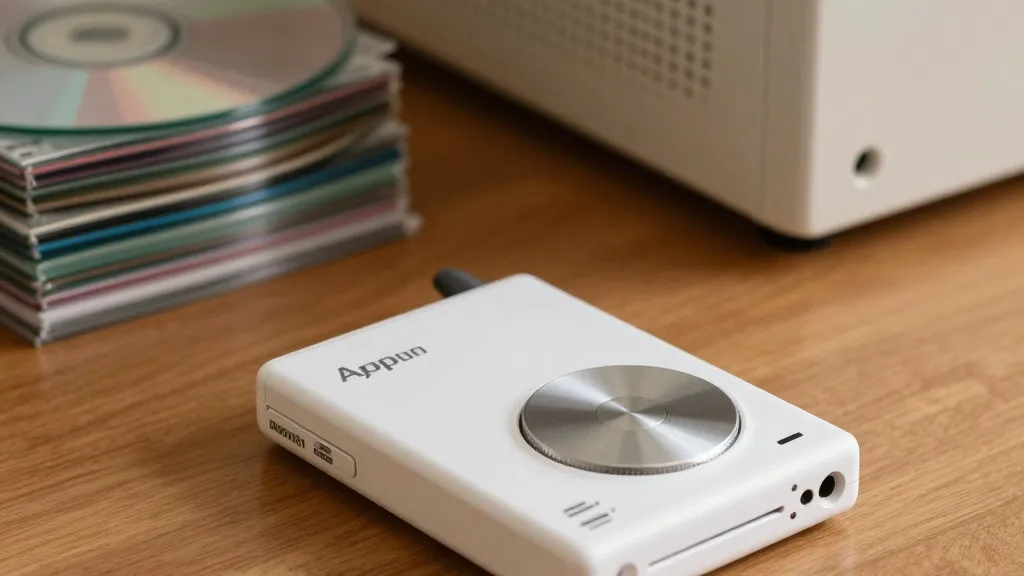
It has been exactly a quarter century since a pocket-sized gadget changed how people listen to music.
On this day in 2001, Apple CEO Steve Jobs stepped on stage to reveal a device that was not a Mac. He described it as a breakthrough digital tool that would soon become a staple for gadget fans. The device was the original iPod, a player designed to put an entire music library into a user's pocket for $399. This launch marked a significant moment for Apple, which had just moved beyond its earlier beige hardware era. The company was thriving with the Mac OS X, iBooks, and iMacs, having recovered from the dot-com bubble burst.
Jobs envisioned the Mac as the center of a digital lifestyle, acting as a hub for various devices. He believed portable music was a massive market without a clear leader, despite existing players from companies like Creative, Sonic Blue, and Sony. At the time, there were four main types of portable music solutions: CD players, MP3 CD players, flash players, and hard disk-based jukeboxes. Jobs identified the hard disk-based option as the best entry point for Apple.
The iPod was introduced as an MP3 player capable of handling standard formats like MP3, WAV, and AIFF with CD-quality sound. Its 5GB storage capacity allowed it to hold approximately 1,000 songs. This estimate was based on typical pop songs encoded at 160Kbps. Jobs emphasized that for most users, this capacity represented their entire music collection. The device’s small size was made possible by a 1.8-inch hard drive from Toshiba, which was only 0.2 inches thick.
The physical dimensions of the player were comparable to a deck of cards, measuring 2.4 by 4 by 0.78 inches. It weighed just 6.5 ounces, which was lighter than most cell phones of that era. Despite its compact build, the device included features like 20-minute skip protection and fast file transfers. It used a single FireWire 400 cable for charging and data transfer. Jobs highlighted that this connection was significantly faster than the USB options available at the time.
According to the presentation, transferring an entire CD of music to the iPod took only five to 10 seconds via FireWire. In contrast, USB connections required about five minutes for the same task. Filling the entire 5GB drive with 1,000 songs was estimated to take 10 minutes on the iPod, whereas a USB player would take five hours. The device also featured a rechargeable lithium-polymer battery that provided 10 hours of continuous playback. Apple stated that the battery could be charged to 80 percent in one hour.
The design of the iPod was praised for its minimalism and durability. Jobs noted that the controls were easy to use with one hand, featuring a scroll wheel with tactile feedback. This allowed users to quickly find music by playlist, artist, or song. During the demo, the first song played was 'Building a Mystery' by Sarah McLachlan. The device also offered an Auto-Sync feature with iTunes, which launched on the same day. This ensured that music libraries curated on a Mac were always up to date on the portable player.
The first iPhone did not arrive until early 2007, more than five years after the iPod's debut. Both devices coexisted in Apple's product lineup for over a decade. However, the iPod's relevance gradually declined as smartphones matured and incorporated music playback features. The final model, the 7th-generation iPod Touch, was released in May 2019. Although the product line was left unmaintained for a few years, it was officially discontinued in May 2022. The original iPod remains a landmark in the history of personal technology.
The release of the iPod coincided with a period of strong growth for Apple. The company had successfully navigated a difficult economic landscape, and the new device capitalized on a universal interest in music. The strategic decision to use a hard drive rather than flash memory set the stage for a new category of consumer electronics. The speed and capacity offered by the FireWire connection and the 5GB drive addressed key pain points for users who had previously relied on slower or smaller-capacity devices. This approach helped establish Apple as a leader in the portable digital media space.
Source: Tom's Hardware