Breaking: Strategists see capitulation and AI repricing after 5.5% Nasdaq crash
Market experts warn of momentum unwind and legislative hurdles, while historical data suggests a rebound within six months.
By Katherine Diallo ·
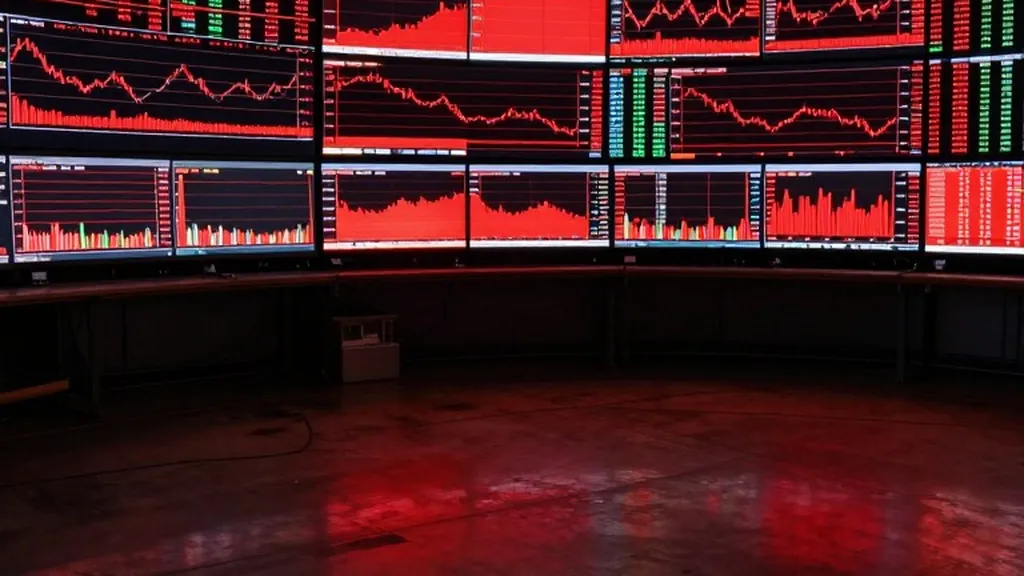
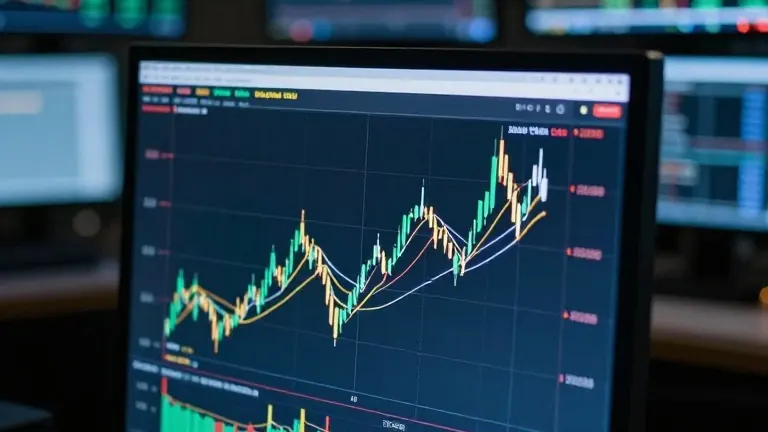
The Nasdaq Composite fell 5.5 percent on Thursday, marking its worst day in 18 months and deepening the index into correction territory. The sell-off followed the Democratic sweep of both chambers of Congress in Tuesday's midterm elections, a result that has shifted the political landscape in Washington. Investors are now weighing the implications of a Democrat controlled Senate on the technology sector, specifically regarding the expansion of artificial intelligence infrastructure. The market reaction was swift and severe, with the index closing more than 11 percent below its recent record high.
Neil Wilson, an investor strategist at Saxo UK, described the session as a complete capitulation-level event in tech stocks. He noted that the fear of a total momentum unwind is driving the selling as Democrats move to pace the frontier of data center development. Wilson observed that while the drop looks totally overdone, the nature of sell everything sentiment in this market means stability must be established first before a recovery can be confirmed. This view aligns with the broader sentiment that the current price action reflects a sharp reassessment of risk rather than a gradual adjustment.
Dan Ives, a tech analyst, emphasized the legislative challenges ahead, stating there is no way to sugarcoat that Democrats taking control will create major hurdles for AI and tech legislation in the Beltway over the next two years. He identified the midterm results as a clear sign that the pace of data center build-out will start to slow. This perspective highlights the specific policy risk that has emerged, moving beyond general economic concerns to target the regulatory environment surrounding new construction projects in key states like Texas and Ohio.
Ted Parkhill, founder and chief executive of Incline Investment Management, argued that the market is moving from the promise of AI to the price of AI. He acknowledged that AI will be transformative for the world in the long run but noted that not every AI-related stock is currently priced appropriately. Parkhill predicted a period of significant turmoil as investors adjust their valuations. This shift in focus suggests that the market is now demanding concrete evidence of returns on the vast sums invested in infrastructure, rather than relying on future potential.
Gene Goldman, chief investment officer at Cetera Financial Group, offered a contrarian view by calling the sell-off exaggerated. He predicted a recovery, noting that corrections in a bull market are typically short lived. Goldman stated that while the situation is ugly right now, he expects to see a bounce back soon. His assessment provides a counterweight to the capitulation narrative, suggesting that the emotional intensity of the day may have exceeded the fundamental damage to the broader market structure.
Historical data reviewed by CNBC adds context to these predictions. The network noted that in ten Nasdaq corrections over the last decade, the index returned to rally mode six months later in every case except 2022. On average, the Nasdaq gained 9.41 percent in the three months after a correction bottom and 17.03 percent over six months. The exception was the January 2022 correction, where the index lost another 18.3 percent over the next six months. This historical pattern suggests that while the short term may be volatile, the medium term outlook has historically favored recovery.
The selling was not limited to the Nasdaq but spread across the broader market. The Dow Jones Industrial Average fell more than 1,800 points, a drop of 3.4 percent, to close at 51,868. The S&P 500 fell 4.3 percent, its worst day since April 2025. The Philadelphia Semiconductor Index, which tracks major chip companies, fell more than 12 percent. Nvidia, a key component of the AI trade, fell 9.2 percent, losing more than $400 billion in market value. The breadth of the decline indicates that investors are de-risking across multiple sectors, not just in technology.
The catalyst for the drop was the political shift in Washington. Democrats campaigned on slowing the spread of data centers and AI, and voters in states with large concentrations of planned facilities rejected further development. In Texas, the new governor campaigned on an immediate moratorium on new data center construction. This local political momentum has raised national concerns that the AI build-out will face new hurdles. The market is pricing in the possibility that state-level restrictions could slow the pace of construction, thereby impacting the revenue projections of companies tied to the AI trade.
The volatility spike was extreme, with the Cboe Volatility Index jumping as much as 5.7 points to above 28. This was its highest reading since March 31, 2026. The 10-year Treasury yield fell to 4.83 percent as investors sought safety in bonds. The Magnificent Seven technology companies shed about $1 trillion in value in the single trading day. The combination of high volatility and a flight to safety underscores the level of uncertainty currently present in the market. Traders are navigating a complex environment where political risk and valuation concerns are converging to drive price action.
As the market digests the election results, the focus remains on how Washington will respond to the growing backlash against data centers. The strategists' views range from expecting a sharp capitulation to predicting a quick bounce back. The historical data suggests that while the path may be volatile, the Nasdaq has typically recovered within six months of a correction bottom. The next few months will be critical in determining whether this crash marks the start of a longer adjustment or a temporary setback in a broader bull market.
Source: BBC News, The Guardian with Reuters, The New York Times, CNBC
More Business · Rip-Off Report · Report a business · Got a Story?