Ukraine's AI Drones Take Over Final Miles of Flight
Companies like The Fourth Law are equipping FPV drones with onboard computers to target vehicles autonomously, a shift that is reshaping the war's tactical dynamics.
By Rahul Garnier ·
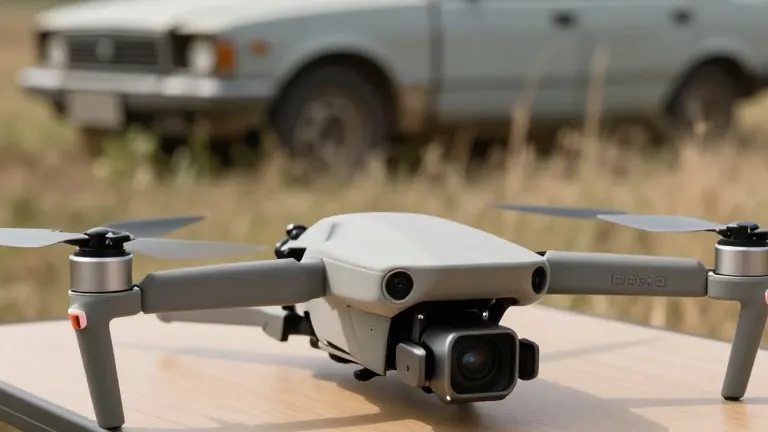
Ukrainian defense firms are deploying artificial intelligence to control the final stages of drone flights. Companies such as The Fourth Law and Odd Systems produce the Lupynis-10-TFL-1, an autonomous drone used by dozens of military units. The system takes over from the pilot during the last 500 meters of flight to guide the aircraft to its target.
Yaroslav Azhnyuk, a 37-year-old computer scientist who previously founded Petcube, leads these efforts. Azhnyuk transitioned from building smart pet cameras to drone warfare after Russia's 2022 invasion. He argues that AI provides an asymmetric advantage by making operators significantly more effective against better-equipped adversaries.
The technology relies on a microcomputer inside the drone that runs a deep-learning neural network. This system processes hours of combat footage to identify specific targets, including light-armored vehicles, tanks, and flying objects. During a test flight outside Kyiv, a pilot named Professor guided the drone until it locked onto a car. The drone then flew itself to the target without pilot input.
Stab, the head of the test and integration team at The Fourth Law, described the onboard system as the drone's mind. He noted that the AI is distinct from large language models or self-driving car algorithms. Instead, it uses simple image recognition tools to navigate and select targets autonomously.
Russia is also deploying AI-enabled drones in the conflict. President Volodymyr Zelenskyy has warned that AI could lead battlefield decisions as soon as next year. This development is part of a high-tech arms race that raises concerns about the speed of automated warfare.
Azhnyuk acknowledges the ethical questions surrounding AI weapons but compares the concern to humanity's history with fire and steel. He maintains that humans still make the final decision on how to use the tool. The Fourth Law named its drone after Anatoliy Lupynis, a 20th-century Ukrainian poet and political activist who survived Soviet imprisonment.
The company tests its drones daily in fields near Kyiv. Stab emphasized that safeguards prevent the drones from going rogue, with humans responsible for selecting targets. Azhnyuk stated that AI drones are hard to jam and function more like calculators than independent agents. He argued that using AI defensively is necessary because enemy systems can make decisions in microseconds, whereas human control takes minutes or hours.
Source: WLRN