Tesla Pushes Humanoid Robot Rollout to 2027, Citing Hardware Delays
The company's third-quarter call detailed ongoing issues with the robot's hands, durability, and artificial intelligence, moving external deliveries back to late 2027.
By Emily Carter ·
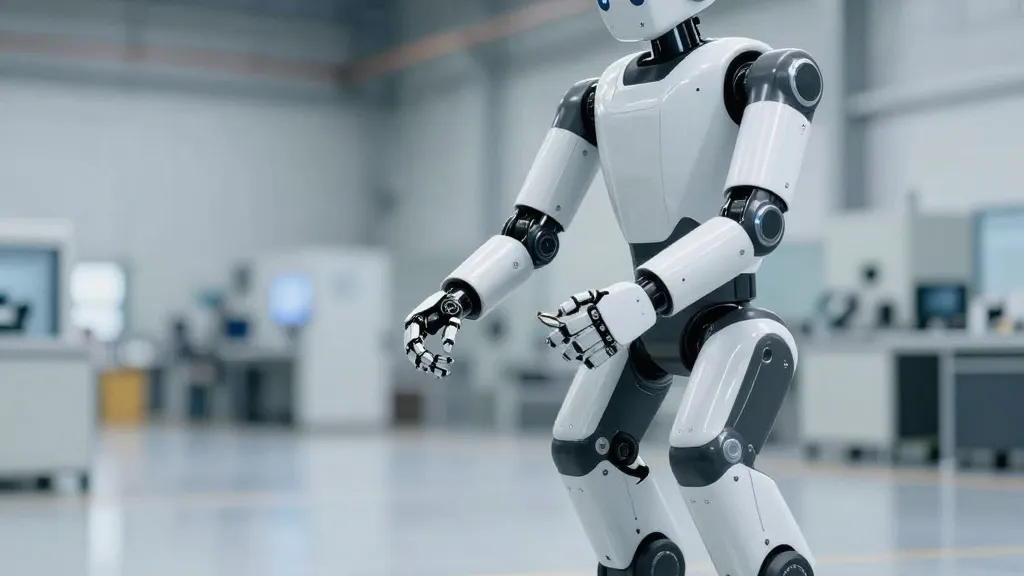
Tesla has moved the target for delivering its Optimus humanoid robot to outside customers to the end of 2027, citing unresolved challenges in its hands, durability, and artificial intelligence. The updated timeline came from Elon Musk during the company's Q3 2026 earnings call on Wednesday.
Those are the same three problems every humanoid robot company is fighting. And despite Musk's claim that nobody is close to Tesla, XPeng and Hyundai's Boston Dynamics look at least as far along.
Musk said Tesla has started early production of Optimus on its high-volume line in Fremont, where Model S and Model X used to be built. Most of a line designed for a million robots a year is installed, but he said it will take at least a year, possibly longer, to reach that rate of about 20,000 units a week, because parts of the design are still changing.
He listed what has to be solved first: the AI, the electromechanical design, and reliability, including making sure the robot doesn't wear out after a month of use. He expects those issues to be solved around the end of next year. That's when Tesla expects to deliver Optimus to companies outside Tesla, starting with industrial jobs that are dangerous, repetitive or need to run around the clock.
When an analyst asked where the design was still changing, a Tesla Optimus engineer pointed to the hand as one of the hardest hardware areas, along with custom gears that still carry reliability concerns. Musk agreed the hand is the main issue, explaining that fingers need to be soft enough to handle delicate objects while surviving constant wear, and robots can't heal like human skin can.
On the AI side, Musk said Tesla is still working through problems with the AI architecture. Tesla doesn't have a fleet of robots collecting data the way its cars do for FSD, so it plans to build 10,000 to 20,000 robots and have them practice tasks in what it calls an Optimus Academy. Tesla also plans to put its AI5 chip in Optimus around April 2027. Musk also promised an Optimus video within a month or two showing the robot doing tasks that aren't pre-programmed, arguing that many humanoid demos look impressive but only run scripted routines that wouldn't hold up in the real world.
Tesla's own Q3 shareholder letter now calls the bots coming off the Fremont line 'the first production-quality bots that we have manufactured.' So every Optimus before this quarter wasn't production quality. And the timeline keeps moving. In 2024, Musk said Tesla would build Optimus for internal use in 2025 and hopefully in high volume for other companies in 2026. In January 2025, he said Tesla would build about 10,000 robots that year, with 'several thousand' doing useful work by year-end. He later admitted none were. Now external deliveries are a late-2027 target.
Musk said on the call that, to the best of his knowledge, "there is no one that is even close to Tesla" on a general-purpose humanoid robot. That's hard to square with what competitors have shown. XPeng turned on an automated IRON production line in Guangzhou in September, with more than 80% of core processes automated. XPeng plans mass production by the end of 2026, deliveries in the first half of 2027 starting with stores and malls, and a European rollout in the second half of 2027. That's a similar timeline to Tesla's, if not slightly ahead.
Boston Dynamics started producing its electric Atlas in January and says all of its 2026 Atlas deployments are already committed, including to Google DeepMind, whose AI models Boston Dynamics is integrating. In September, it opened a robot training center at Hyundai's Metaplant in Georgia, where Atlas is learning to sequence car parts for the assembly line. Hyundai plans to deploy 25,000 robots across its plants over the next few years. Boston Dynamics also hired Milan Kovac, Tesla's former head of Optimus, in January.
Boston Dynamics also seems to have taken a more pragmatic approach to hands, prioritizing sturdy grippers for industrial parts over human-like dexterity. That's less impressive in a demo, but it's a way around the problem Tesla says is holding it back. Tesla has promised a video in a month or two showing the robot performing real, unscripted work. If it shows Optimus doing real work, great. But we've heard about Optimus timelines before, and they've slipped every year. Why should late 2027 be different?
Source: Electrek