
Peru's President Inspects Salvadoran Mega-Prison
Keiko Fujimori toured CECOT to study security protocols, following a similar visit by Costa Rica's leader earlier this month.
By Katherine Diallo ·
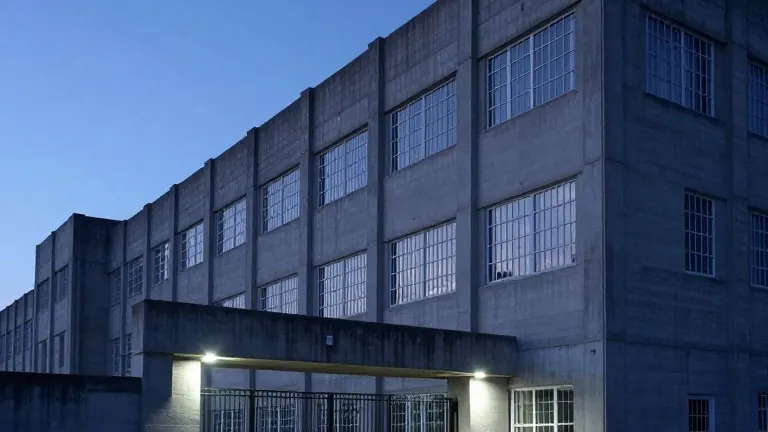
Peru has long struggled with violent crime and internal security challenges. President Keiko Fujimori visited El Salvador on Thursday to inspect the Terrorism Confinement Center, a maximum-security facility designed to isolate high-risk gang members.
Fujimori assumed the presidency in July after campaigning on a promise to build a prison similar to El Salvador's model. Her country currently faces a rise in homicides and rampant extortion. The visit follows a tour of the same facility by Costa Rican President Laura Fernández more than a week ago. Fernández recently inaugurated her own maximum-security prison in response to increasing drug-related violence in her region.
Salvadoran ministers Gustavo Villatoro and Francis Merino Monroy welcomed Fujimori and her delegation. They presented the facility's infrastructure design, surveillance systems, and isolation mechanisms in one of the prison's main halls. The meeting agenda included plans for technical exchanges between the two nations. Topics covered the transfer of expertise in citizen security, digital security, and the modernization of state services.
Fujimori described the Bukele administration's approach as a successful and useful model. She noted that Peru faced similar historical challenges in the 1980s and early 1990s when confronting two major terrorist groups. She is scheduled to meet directly with President Nayib Bukele later in the day.
The CECOT opened in 2023 with a capacity for 40,000 inmates. It gained global attention in 2025 when the Trump administration sent more than 250 Venezuelan deportees with alleged ties to Tren de Aragua to the facility. Many of those detainees, including Kilmar Abrego Garcia, were later released and alleged they had been beaten and tortured while in custody.
El Salvador has maintained a state of exception since March 2022. This emergency measure suspends certain constitutional rights to combat gangs. More than 90,000 people have been imprisoned under this regime. Human rights organizations have documented thousands of cases of arbitrary arrests. The country now holds the highest incarceration rate per capita in the region, with approximately 1.5% of its population behind bars.
Source: WRAZ