Federal Lawsuit Seeks To Hold Up Alaska Senate Vote Certification
The Justice Department is contesting a potential Democratic win in the Alaska Senate race over ballot names.
By Katherine Diallo ·
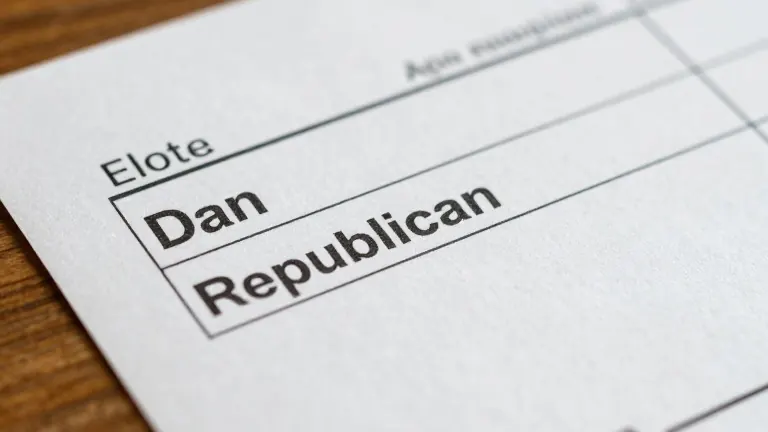
Voters in Alaska face a delay in finalizing their Senate results as the federal government contests certification. The Department of Justice filed a lawsuit late last week asking a court to pause certification of a potential victory for Democratic candidate Mary Peltola. The complaint centers on whether voters were confused by having two candidates named Dan Sullivan on the ballot. Peltola, a former congresswoman, is running against Republican incumbent Dan Sullivan.
President Donald Trump directed the Justice Department to challenge the race preemptively, before a Democratic victory is official. Following the filing, Trump called for prosecution of Peltola. He cited a New York Times report stating her campaign helped recruit a candidate also named Dan Sullivan to draw votes from the Republican incumbent. Trump told reporters he initiated the legal action: "I'm the one that said do it," he said.
The lawsuit marks the first time since the Civil Rights era that the federal government has sued to halt certification of an election. Under the Constitution, states hold the power to certify results. Attorney General Todd Blanche said the department did not want to intervene in elections but argued it had no choice in Alaska. "We are not doing anything improper," Blanche said Sunday on CNN, adding that neither he nor the president is "trying to take over a state election in any way, shape or form."
Republican officials in Alaska have not rallied behind the suit. Sen. Dan Sullivan would not say whether he supports the litigation. Alaska's Republican-controlled state government filed court papers seeking dismissal. Sen. Lisa Murkowski, the state's other Republican senator, said the administration "should never have filed" the lawsuit. Legal experts say parties often field similar candidates to split an opponent's vote, and if state courts permit the practice, the federal government has no role in challenging the result.
Derek Muller, a Notre Dame law professor, wrote that the legal argument in the Alaska case was "one of the worst ones I've ever seen." He said that assessment should reassure the public regarding election outcomes. "The notion that there's going to be something systemic that's going to thwart the will of the voters seems much more speculative," Muller said. "A lot of the conduct seems impulsive rather than strategic and planned."
The administration has pursued other election-related actions this year. The Justice Department sued California over an alleged 20,000 noncitizens on voter rolls and made a similar demand on Washington regarding about 400 voters. A federal judge rejected the California demands on Wednesday. The department also seized ballots and records in Georgia's Fulton County related to the 2020 presidential election and opened an investigation, which has not produced evidence supporting claims of fraud in that vote.
Trump announced a $1 million bounty earlier this week for proof of prior or current voter fraud. It was not clear how he planned to follow through. He told reporters he would accept election results "if they're honest elections." Courts have blocked two executive orders aimed at changing voting procedures and rejected more than two dozen attempts to obtain detailed voter information from states. Matt Dallek, a Georgetown political scientist, said the courts are likely to throw out the charges.
Theresa Lee, a senior attorney with the ACLU, said her group has prepared for this period. "For at least the last year and a half, they've been laying that groundwork," Lee said. "We've been preparing for just as long, if not longer." About 35 million Americans have cast ballots so far without notable disruption.
Source: WKMG-TV