Book Details Subtle Failures Behind Subway Death
A new investigation argues that both the victim and the man who killed him felt abandoned by city systems.
By Rahul Garnier ·
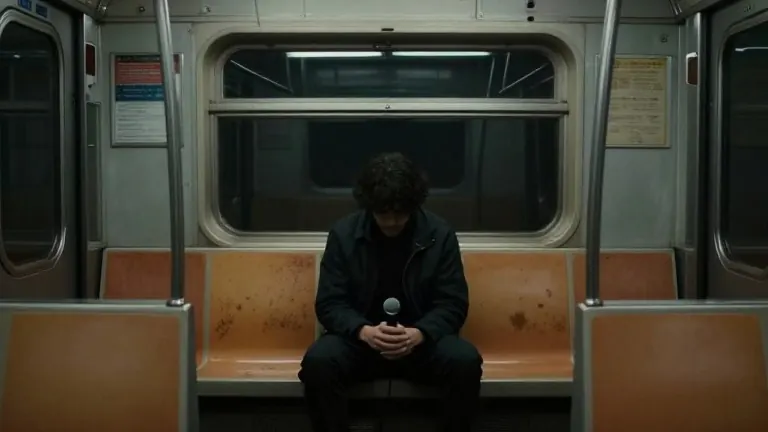
Jordan Neely and Daniel Penny both felt let down by the institutions meant to protect them, according to a new book by journalist Anand Giridharadas. The work, titled Man in the Mirror: Hope, Struggle, and Belonging in an American City, argues that a pervasive sense of abandonment led to the fatal subway encounter on May 1, 2023. Giridharadas spent more than two years investigating the events surrounding Neely's death.
Neely, an unhoused Black man, had been a familiar figure on the New York City subway for years. He often entertained crowds with his Michael Jackson impersonation. On the day of his death, however, he was in a crisis, shouting threats and frightening other passengers. Penny, a white former Marine, stepped in and held Neely in a chokehold for six minutes. Neely died from the restraint. A video of the incident quickly divided the country, with some viewing Penny as a citizen acting where police failed and others seeing Neely as a victim of disposable Black life.
The legal resolution came in December 2024. A jury hung on a second-degree manslaughter charge, leading prosecutors to dismiss that count. They then acquitted Penny of criminally negligent homicide. Within days of the verdict, Vice President-elect JD Vance invited Penny to the Army-Navy game with President-elect Donald Trump. Shortly after, the Silicon Valley venture capital firm Andreessen Horowitz offered him a job. He became a partner on the firm's American dynamism team, which invests in startups focused on weapons systems and drones.
Giridharadas describes Neely's history as a mix of trivial offenses typical of homelessness and more serious violent crimes. Neely had been sent to a rehabilitation facility in the Bronx as an alternative to incarceration. He walked out of that facility. In April 2023, just weeks before his death, outreach workers and police interacted with him at Coney Island. None of them recognized him as a man with an active warrant. He ran off into the night and was found dead on a subway floor three weeks later.
The book also examines Penny's origins in West Islip, Long Island. Giridharadas characterizes these central Long Island towns as places populated by white flight from New York City. He suggests these communities harbor a barely concealed contempt for the city they left. Penny grew up in this environment, which Giridharadas frames as a complex immigrant-like relationship with a nearby metropolis.
Regarding Penny's demeanor, Giridharadas states he did not sense sadness or remorse during a brief conversation at Penny's victory party. This lack of visible emotion was also apparent in bodycam footage and interrogation records. Giridharadas notes that Penny appeared to lack curiosity about Neely's condition during those initial moments.
The author highlights the political projection onto Penny. He describes Penny as ideologically blank, allowing various groups to project their own ideas onto him. Penny willingly embraced the money and attention that followed his acquittal. This trajectory includes his appearance with Vance and Trump and his subsequent high-level job offer.
Giridharadas draws a parallel between the Penny case and the trial of Luigi Mangione, who killed UnitedHealthcare CEO Brian Thompson. On the right, Penny was framed as a vigilante acting in a void left by unresponsive systems. On the left, Mangione was similarly described as stepping into a void of a cruel healthcare system. Giridharadas points out that both sides use the same argument: the system is rigged, and individuals must take matters into their own hands.
Hawk Newsome, a Black Lives Matter activist in New York, commented on the vigilante narrative. He stated that if there are to be vigilantes, Black communities need their own, alongside their own schools and media. Giridharadas uses these reactions to illustrate a common thread across the political spectrum: the belief that the system has failed and someone must step up to act.
Source: WFAE