200,000 Witnesses Watch 108 Stupas Rise in 12 Hours in Bhutan
Volunteers assembled prefabricated structures along the Mao Chhu River in Gelephu, finishing four hours ahead of schedule.
By Rahul Garnier ·
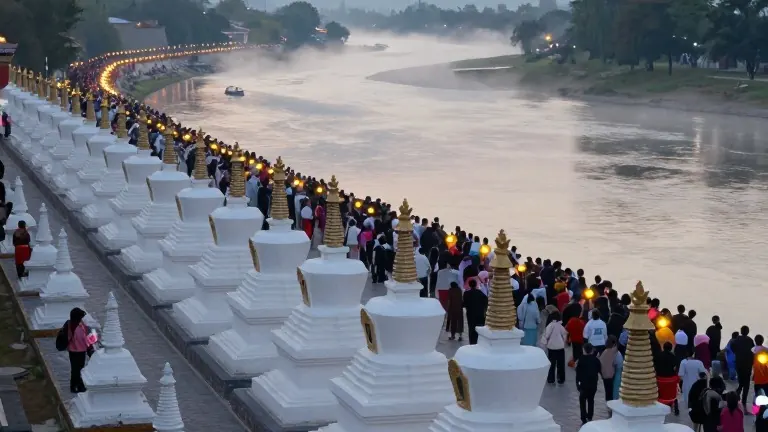
Bhutan has long relied on spiritual principles to guide its national identity, but the construction of a new economic zone has drawn global attention to its latest physical monument. On Sunday, the kingdom marked the completion of 108 large stupas in Gelephu, a project intended to anchor the development of the Gelephu Mindfulness City.
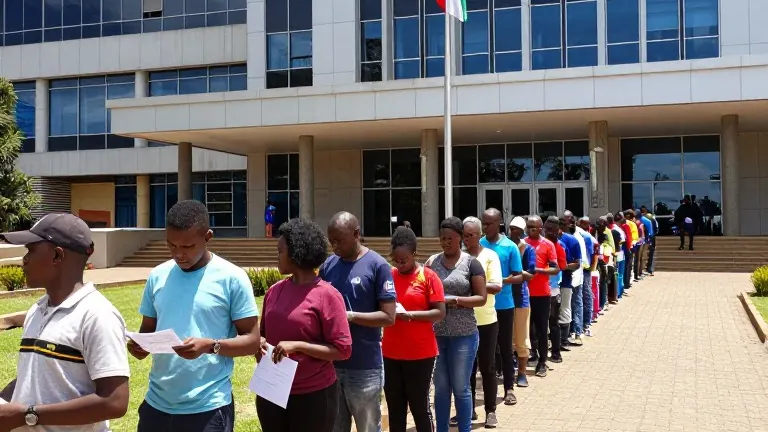
About 200,000 people gathered in Gelephu to observe the final assembly of the structures. The crowd included Buddhist masters from various schools and denominations, as well as residents and international visitors. Kinley Dorji, a spokesperson for the city, noted that organizers initially expected only thousands of attendees. By the time the event began, the number had climbed to 100,000, with total attendance reaching the reported 200,000.
The construction effort relied on approximately 40,000 volunteers who worked from 2:00 a.m. to 2:00 p.m. This 12-hour window saw the external structures of all 108 stupas completed, finishing about four hours ahead of the scheduled time. The project, known as Project 108, involves installing the monuments in a single file along the Mao Chhu River. Each stupa stands about 50 feet tall and is spaced roughly 354 feet apart.
Gelephu is located in southern Bhutan along the border with India, approximately 150 miles south of the capital, Thimphu. The town currently has a population of about 10,000. The Gelephu Mindfulness City was conceived by King Jigme Khesar Namgyel Wangchuck and designed by Danish architects. The design prioritizes ecological sustainability and citizen happiness over commercial profit. The nation faces economic pressures, including rising unemployment and falling birth rates, and officials hope this development will provide opportunities to keep young people in the country.
The number 108 is considered sacred in Buddhism, which is the state religion in Bhutan. The structures, known as Jangchub Chortens in Vajrayana Buddhism, will be filled with prayers, blessings, relics, and spiritual texts. A project statement described the act of building a chorten as one of the most meritorious acts in the Buddhist tradition. The statement called Project 108 a collective offering to the world.
Among the attendees was the Venerable Pannakara, a Theravada Buddhist monk who completed a 2,300-mile Walk for Peace from Fort Worth, Texas, to Washington, D.C., earlier this year. He traveled with his teacher, the Most Venerable Ratanaguna. Pannakara posted a video of the site, stating that the group came to witness and pray. He confirmed that 200,000 people from around the world attended the special moment.
The tradition of chortens in Bhutan extends more than 2,500 years, with the earliest built to enshrine relics of the Buddha. The new stupas stand on a site where the plains of India rise into the Himalayas. Nighttime crowds held glowing yellow light balls and chanted at the foot of the monuments following the daytime construction work.
Source: WRAZ