Fitbit Edge costs $180 for basic tracking without payments
The new device drops smartwatch features like calls and tap-to-pay to prioritize battery life and simple health metrics.
By Katherine Diallo ·
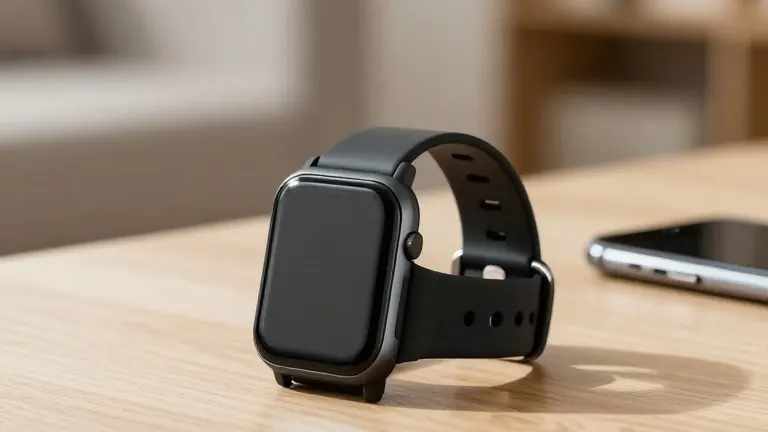
Google launched the Fitbit Edge this week, a $179.99 fitness tracker that deliberately strips away the smartwatch features added to recent Charge models. The device returns to the simple form factor popular between 2014 and 2020, offering basic health metrics without the complexity of Wear OS or cellular connectivity. It is a direct response to consumer fatigue with increasingly feature-heavy wrist devices.
The hardware is lightweight and features a fully rounded display that replaces the boxy look of the Fitbit Charge 6. Battery life lasts approximately one week on a standard charge, though enabling the always-on display reduces that duration to about 1.5 days. The device includes built-in GPS for tracking runs and walks without a phone, as well as alarms, notifications, and music controls. It lacks microphones and speakers, meaning users cannot take calls on the wrist.
Andy Abramson, head of product at Google Health, explained the omission of contactless payments by noting that less than one percent of Charge 6 owners used that feature. Instead, the company prioritized a sleek design, an altimeter, and weeklong battery performance. This decision narrows the device's focus to core fitness functions, eliminating the smartwatch creep that has characterized recent iterations of the product line.
The software experience has shifted to the Google Health app, replacing the standalone Fitbit application. Users can access an AI coach through a yearly subscription, which costs $10 monthly after a three-month free trial included with purchase. This AI feature generates custom routines and provides guidance, though early testing suggests it requires significant user input to produce accurate results. The app also offers improved automatic activity tracking, a feature Google has refined over the past several months.
Testing the automatic tracking revealed mixed results. On a 2.4-mile run, the Edge correctly identified the transition from a warmup walk to running and back to walking. It estimated the distance at 2.55 miles, a close approximation of the actual route. However, the device logged a pace of 10 minutes and 49 seconds per mile, while the actual pace was 11 minutes and 38 seconds. This pattern of overestimating speed was consistent across multiple tests, making the feature useful for capturing untracked activities but less reliable for precise performance data.
Pricing places the Edge in a competitive middle ground. At $179.99, it costs $80 more than the Fitbit Air but remains cheaper than the Apple Watch SE 3, which starts at $249. Alternative straps add to the cost, with a metal link bracelet priced at $150 and a magnetic silicone strap at $60. The bezels on the display are prominent, a design choice that may appeal to some users while frustrating others who prefer larger screen real estate.
The device will offer Health Guardian features in November, allowing users to view noninvasive insulin resistance and blood pressure trends. Until then, the Edge functions as a straightforward tracker for those who want glanceable information without the commitment of a full smartwatch. The launch marks a return to basics in a market that has increasingly pushed users toward more invasive data collection and complex interfaces.
Source: The Verge